

First time boat buyer in Maryland? Learn the excise tax, DNR paperwork, safety certificate, and hidden costs most new buyers miss before they sign.
Most advice for a first time boat buyer stops at “set a budget and pick a boat you like.” That’s a start, but it skips the parts that surprise people in Maryland. There’s a 5% state excise tax. You may need a boating safety certificate before you can legally run the boat. The Bay can turn choppy by mid-afternoon. And you need to decide on storage before delivery day.
At Rhode River Boat Sales in Edgewater, we have been helping Chesapeake Bay boaters since 1982, and almost every new buyer asks the same questions. This first time boat buyer guide covers what most people only learn after they sign, so you can walk into a showing knowing what to expect and what to ask.
What Every First Time Boat Buyer in Maryland Should Know
Here is the short version before we go deeper:
The purchase price is not the total price
Maryland charges a 5% vessel excise tax, plus title and registration fees.
You may need a certificate to operate
Anyone born on or after July 1, 1972, needs a Maryland boating safety education certificate to run a motorized vessel.
The Bay decides more than you think
Afternoon wind and chop on the Chesapeake should shape the size and hull you choose.
Ownership has recurring costs
Storage, insurance, maintenance, winterization, and fuel continue long after the sale.
Paperwork matters
In Maryland, a missing title can stop a transfer completely, especially in a private sale.
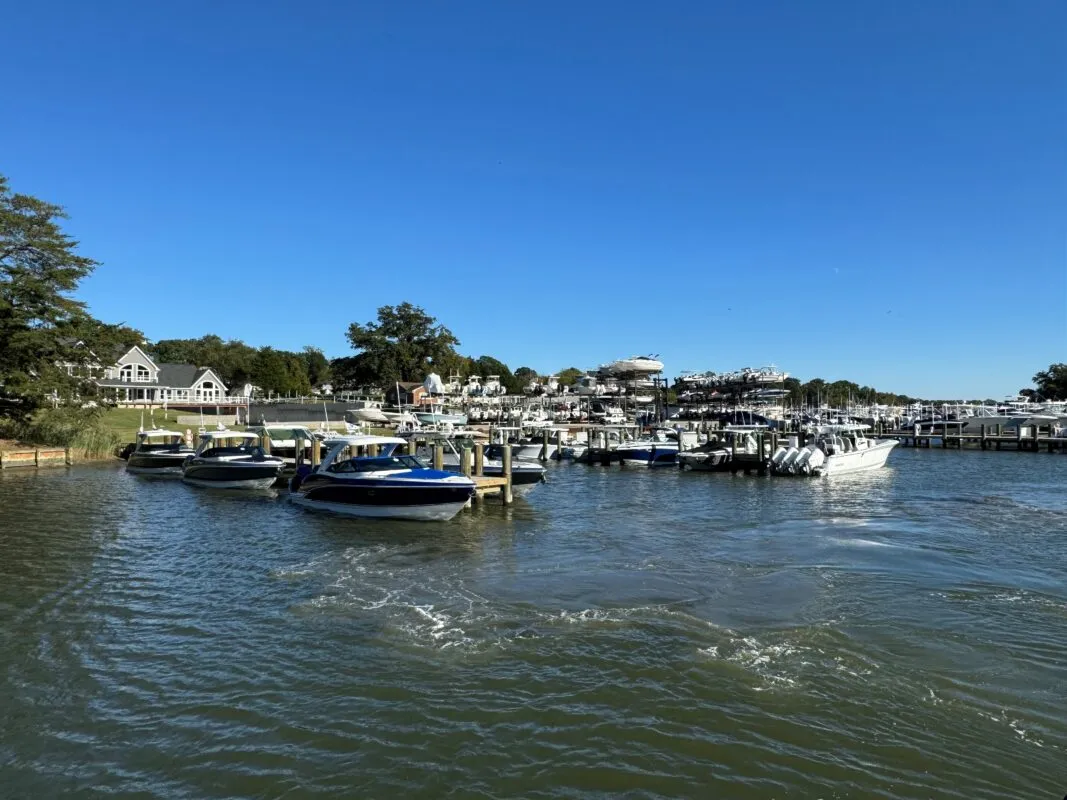
USE IMAGE: rhode-river-marina-boat-storage-edgewater-md
1. The Price Tag Is Only the Beginning
The biggest surprise for most first-time boat buyers is how many costs sit outside the advertised price. Put them in your budget early so they don’t catch you off guard later.
Maryland Costs That Show Up After the Handshake
Boats used principally in Maryland waters carry these costs at titling:
- 5% vessel excise tax on the purchase price or fair market value, with a $5 minimum and, effective July 1, 2026, a maximum of $16,100.
- $20 title fee
- $70 registration fee for a two-year decal, regardless of boat length or horsepower.
- $15 security interest filing fee if a lender records a lien.
The excise tax is due within 30 days of purchase. If you miss that window, the state adds a 10% penalty plus 1.5% interest per month.
If you trade in a boat as part of a purchase through a licensed Maryland dealer, the excise tax is based on the price minus the traded vessel’s value. On a larger purchase, that can make a real difference.
If your boat comes with a trailer, that’s a separate step: trailers are registered through the Maryland Motor Vehicle Administration, not DNR.
Ongoing Costs to Plan For
Beyond the paperwork, budget for the costs that repeat every season:
Storage:
Wet slip, lift slip, dry rack, or trailer storage at home (check local rules before parking a boat in your driveway).
Insurance:
Maryland does not require boat insurance by law, but many lenders and marinas ask for proof of coverage.
Maintenance:
Annual engine service, spring commissioning, and fall winterization.
Bottom paint:
Typical for boats kept in the water during the season.
Fuel and safety gear:
Life jackets, fire extinguisher, signaling devices, dock lines, and fenders.
On-water towing coverage:
The average U.S. towing bill can be about $700, which is why many owners add a towing membership or insurance endorsement.
2. The Chesapeake Bay Will Shape Your Boat Choice
Many buyers shop by looks first. On the Chesapeake, it works better to start with the conditions. The Bay can be calm at sunrise and choppy by mid-afternoon.
The best boat for Chesapeake Bay boating is the one that fits where you’ll run, how many people come along, and what you like to do on the water.
Match the Hull to How You Will Actually Use It
Ask yourself a few honest questions:
- Will you fish, cruise, tow tubes, or mix all three?
- How many people usually come along?
- Will you run the open Bay or stay in rivers and creeks like the Rhode, South, and West Rivers?
- Do you need shade and a head compartment for family days?
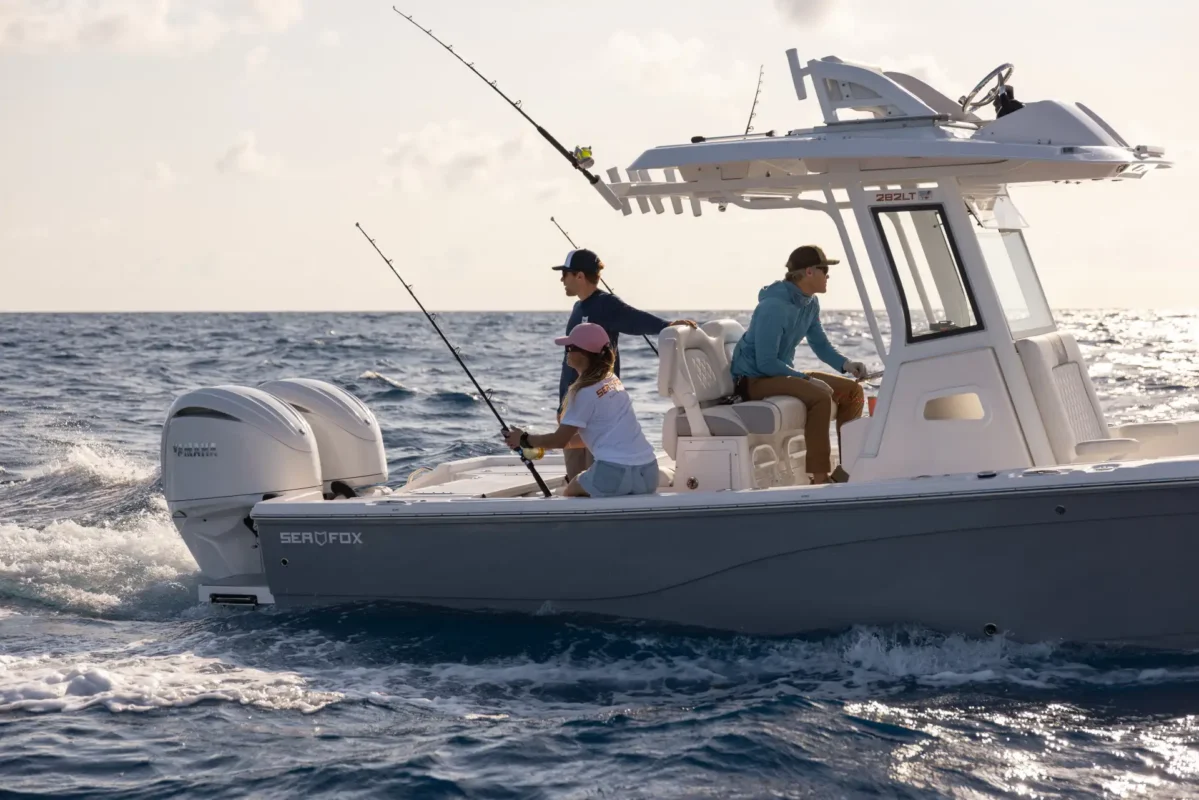
If fishing comes first, a center console from Blackfin, Bulls Bay, or Pioneer is a common starting point. If your crew wants seating, swim access, and room to relax, a bowrider or dual console from Monterey may fit better. Our comparison of the Blackfin dual console and center console and our Monterey vs. Bulls Bay guide for families lay out those tradeoffs in detail.
When you compare boats, look at hull design and how the boat rides in a chop, not just its length. Bring those questions to a sea trial: a boat that feels comfortable on a calm morning can feel very different on a windy afternoon.
Best High Performance Boat for First-Time Buyer?
Start With Control, Not Speed
Some buyers come in wanting horsepower from day one. But the best high performance boat for a first-time buyer usually has power you can grow into, not power you’ll struggle to manage on your first day.
Look for:
- Predictable handling at low speed, which matters more around docks and fuel piers than top speed does.
- Engine power within the manufacturer’s rating for that hull.
- Modern helm features, such as digital controls or joystick docking where installed, that make tight maneuvering easier.
- A layout that keeps passengers seated and secure when the boat is on plane.
3. You May Need a Certificate Before You Need a Boat
Under Maryland law, anyone born on or after July 1, 1972, must have a certificate of boating safety education to operate a motorized vessel. The certificate doesn’t expire, and you must carry it while operating. Not being able to show it carries a minimum $25 penalty for a first offense and up to $500 for later offenses.
Even if you were born before that date, a safety course is worth taking.
It covers navigation rules, channel markers, right-of-way, and emergency procedures, which makes your first season less stressful for you and your passengers.
4. New vs Pre-Owned Boat Is a Big Decision
New Boats
New boats come with current model-year features, factory options you choose, and manufacturer warranty coverage that varies by boat, engine, and program.
Pre-Owned Boats
Pre-owned boats can stretch a budget and often include equipment a previous owner already paid for.
Which is Better?
Buyers often ask whether a 10-year-old premium boat is better than a brand-new budget boat. There’s no single answer.
On the older boat, look at:
- Engine hours
- Service history
- Storage
- Condition
On the new boat, look at:
- The warranty
- The equipment
Compare the two specific boats rather than relying on brand reputation.
Our guide to pre-owned boats versus new boats walks through the tradeoffs from an Edgewater perspective.
How to Check Out a Used Boat Before You Commit
If you are browsing used boats for sale in Maryland, pay as much attention to the paperwork as to how the boat looks:
Search for:
Service records
Paperwork is the clearest way to know whether a used boat has been professionally maintained: dated invoices, engine service logs, and records from a marina or dealer.
Engine hours
Compare them with the boat’s age and how it was used.
Hull Identification Number (HIN)
Confirm the HIN on the transom matches the title and registration.
Marine survey and sea trial
Buyers may arrange a marine survey and sea trial as part of an accepted purchase agreement, subject to the transaction terms. Ask whether any prior inspection reports are available.
Watch for Title Red Flags
Many buyers only learn this when it’s too late: in Maryland, selling a titled vessel without giving the buyer the certificate of title is illegal, and DNR will not transfer ownership without it.
DNR has specifically warned about boats advertised on social media without titles.
Two other details worth knowing:
Delaware does not title boats
If you buy from a Delaware owner, you will need a copy of the current registration card and a signed, certified bill of sale.
If you buy a boat in poor condition for a low price
Title it within 30 days. If you wait until after repairs, DNR can charge excise tax on the higher restored value.
5. Financing Works Differently Than a Car Loan
Boat loans often run longer than auto loans. Lenders look closely at your:
- Credit history
- Income
- Existing debt
- The boat itself
A common minimum credit score is around 680, and 700 or above is often recommended for better terms. A common guideline is to keep the monthly boat payment under 10% of your monthly income.
At Rhode River Boat Sales, financing is available through third-party lending partners, subject to application, credit approval, lender requirements, and current program terms. You can review options and start an application. Keep in mind that a payment calculator only gives an estimate. Taxes, fees, insurance, and storage all come on top of the loan payment.
Already own a boat?
A trade-in can reduce the amount you finance and, as noted above, can lower the Maryland excise tax on a dealer purchase.
Trade-in value depends on make, model, year, condition, engine hours, and market demand, and an initial estimate may change after inspection.
6. Storage Decisions Come Before Delivery Day
Where you keep the boat affects your budget, your maintenance routine, and how often you actually use it. A boat that’s easy to get on the water gets used more.
- Wet slip: quick access, but the hull stays in the water, so bottom paint and regular cleaning matter.
- Lift slip: keeps the hull out of the water between trips.
- Dry rack: the boat sits on a rack and is launched when you call ahead.
- Trailer: flexible and often cheaper, but you need a properly rated tow vehicle, the skills to launch at a ramp, and a legal place to park it.
Buyers can also access storage, parts, and service support through the affiliated Rhode River Marina in Edgewater, which offers dry rack, wet slip, and lift slip storage. For off-season planning, see our guide to indoor versus outdoor winter boat storage.
7. Your First Season Is a Learning Season
Nobody expects a new boater to know everything on day one. A few habits help you learn faster:
- Ask for a full walkthrough of the boat’s systems before your first trip.
- Practice docking on calm mornings before busy weekends.
- Check the forecast and watch afternoon wind, especially on open stretches of the Bay.
- File a float plan with someone on shore so they know where you are going and when you expect to return.
- Use the right fuel. Marine engines generally should not use fuel with more than 10% ethanol (E10). Check your owner’s manual.
- Follow the rule of thirds for fuel: one third out, one third back, one third in reserve.
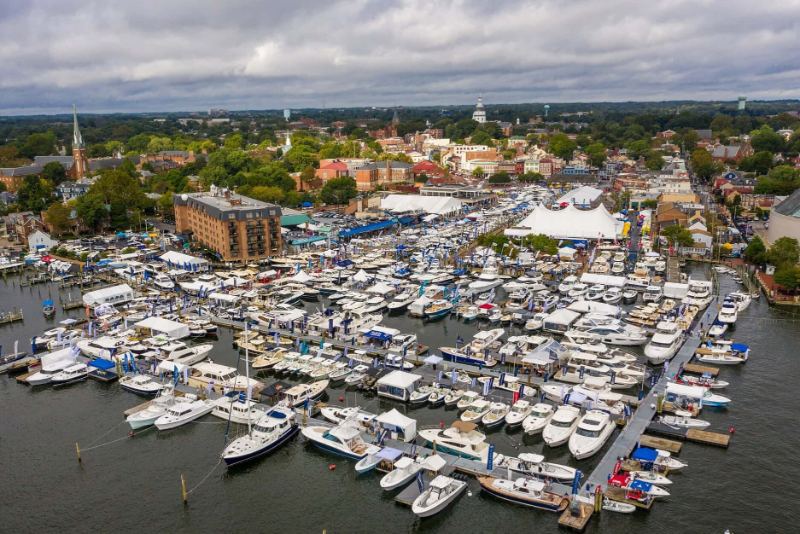
USE IMAGE: annapolis-powerboat-show-maryland
First Time Boat Buyer Tips: A Quick Checklist
Before you sign, make sure you can check off each item:
- Your total budget includes excise tax, title, registration, insurance, storage, and maintenance.
- You have insurance and storage quotes in hand.
- You’ve completed the boating safety certificate, if you need one.
- The boat type matches how and where you’ll use it.
- The sea trial is scheduled, and for a pre-owned boat, a marine survey is arranged if you want one.
- The HIN matches the title, and you have any lien release.
- You’ve reviewed the financing terms in writing.
- Delivery, storage, and the first-trip walkthrough are planned.
Ready to Shop as a First Time Boat Buyer in Maryland?
Rhode River Boat Sales is a family-owned and operated dealership since 1982, located at 2824 A Solomons Island Road, Edgewater, MD 21037, near Annapolis. Browse new boats and pre-owned boats, review our step-by-step boat buying process, or call 410-798-4445.
Our team is available Monday through Saturday, 8:00 a.m. to 5:00 p.m.
A good first purchase starts with a conversation, not a commitment. Contact our team to confirm availability and schedule a showing.
Frequently Asked Questions about First Time Boat Buyers in Maryland
What size boat should a first time buyer get?
There’s no single right size. It depends on where you’ll boat, how many people come along, and how you plan to store it. Smaller boats are easier to trailer, dock, and maintain, which suits rivers and creeks. Buyers who plan to cross open stretches of the Chesapeake often look at larger boats that handle afternoon chop more comfortably. A sea trial in real conditions is the best way to decide.
What credit score do you need to buy a $60,000 boat?
It depends on the lender. Industry sources commonly cite a minimum credit score around 680, with 700 or higher often recommended for better rates and terms. Lenders also look at income, existing debt, down payment, and the boat itself. Financing is subject to application, credit approval, and lender requirements, so the only way to get an exact answer is to apply.
What is the cheapest month to buy a boat?
The off-season, generally late fall through winter, is often cited as the best time for deals, with December through February mentioned most. Sellers and dealers may be more flexible once boating season is over, while summer usually brings the highest demand. The price of any specific boat still depends on inventory, model year, and condition.
How do you transfer ownership of a boat in Maryland?
For a boat already titled in Maryland, the seller signs the title over to the buyer, filling in the purchase price and date. The buyer then sends the respective forms to a DNR Service Center by mail or by appointment, along with:
- the properly assigned title
- a certified or notarized bill of sale, if any details are missing from the title
- a lien release, if a lien is recorded
The buyer pays the 5% excise tax and fees within 30 days, and the seller should notify DNR of the sale within 15 days.
Is buying a boat a tax write-off?
Usually not for personal use. But under IRS Publication 936, a boat with sleeping, cooking, and toilet facilities can count as a home. That means interest on a loan secured by the boat may be deductible as a qualified second home if you itemize and meet IRS rules. Rhode River Boat Sales does not provide tax advice, so speak with a tax professional about your situation.
Is a 10-year-old premium boat better than a brand-new budget boat?
It depends on the two boats. An older premium boat may be better built and better equipped. A new boat offers current technology and manufacturer warranty coverage, which varies by program. For the older boat, look at engine hours, service records, storage history, and a survey. For the new boat, look at the equipment and warranty terms.
Does Maryland require boat insurance?
Maryland law doesn’t require insurance for recreational boats, but many lenders and marinas ask for proof of coverage. Talk to an insurance agent about liability, physical damage, and on-water towing coverage before you take delivery.